
Thirst Behavior is a project about wine, taste, and the social performances that form around them, the rituals of enjoyment shaped by status, media, money, and desire. Wine is the entry point; the real subject is how taste gets made, circulated, and contested, especially in New York and the Hamptons, where leisure and tastemaking overlap most visibly.
You can find my most recent feature here.
Friday features are always free, but if you want the weekly intel and ongoing education—plus to support independent wine writing that doesn’t do scores or sponsors—upgrade whenever it feels right.
If you’d like to work together or have consulting inquiries, pitches, or scoops, please email me at bodhilanda@gmail.com.
Last week, The New York Times published Ligaya Mishan’s two-star review of Bistrot Ha, generating some delightful controversy among the food-media commentariat. Though the review was generally positive, one of the visits Mishan describes was a total catastrophe.
This is the stuff of service-world nightmares: a carafe of water spilled into a diner’s lap, a dessert dropped hard enough to send its ice cream onto the table, fries accidentally seasoned with sugar instead of salt because someone accidentally switched the pinch bowls.
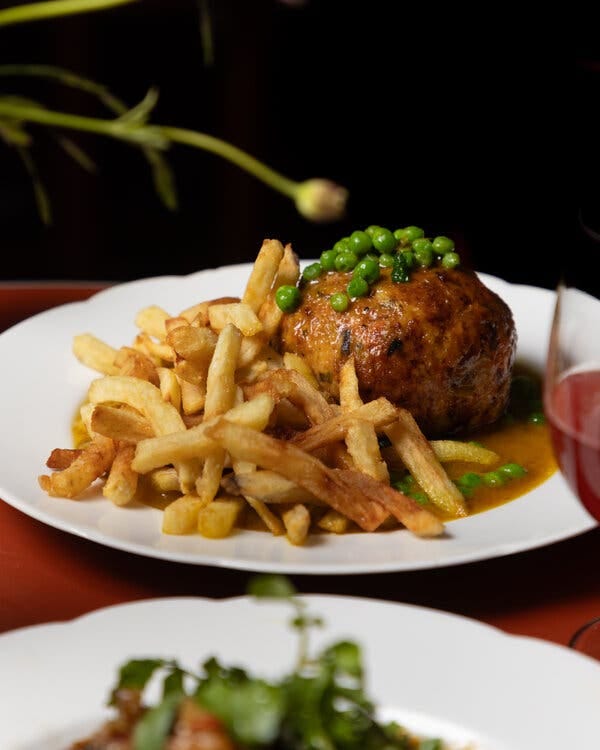
Mishan gave the restaurant a pretty good review anyway. Bistrot Ha remains, in her account, one of the most exciting restaurants in New York. “Sometimes messiness is a price you’re willing to pay for some of the most thrilling food in town.” The disastrous meal is neither suppressed nor converted into a verdict.
That ambivalence strikes me as central to restaurant criticism now, a form caught somewhere between the aesthetics of consumption and the aesthetics of labor. The critic makes meaning from what it feels like to receive hospitality; restaurant workers understand what it takes to produce. Neither position contains the restaurant in full, although both are prone to behaving as if it does.
Eddie Huang jumped into the ring. His sworn enemy, The NYT, had criticized his friend’s restaurant and he was not about to let it go. One of the enduring pleasures of food media is watching people, especially Huang, go to war with the Times: the paper is too large, too much of a cultural behemoth, to experience the fight in the same register, leaving its enemies to maintain a unilateral blood feud across decades, editorial regimes and changes to the website font. At some point, I’m sure I’ll take up a similar fight and I look forward to it.
In “The New York Times Goes to Bistrot Ha’s and Delivers a Very Bush v. Gore Result”, Huang argued, in the general tone of you guys just don’t get it, that Mishan had mistaken the codes of another world for disorder. What she called “messiness” might instead be vulnerability, authenticity or simply humanity. “There’s nothing messy about Ha’s Snack Bar or Bistrot Ha,” he wrote. “It’s just another world.”
Huang reached back to Pete Wells’s 2015 review of Mission Chinese Food, in which Wells contrasted the old Mission Chinese’s beer-keg hospitality with the host lectern at its new address. For Huang, the sentence carried the institutional condescension of someone who had never been to a good party. His enemies are durable, his campaigns long. Please continue to go TF off, Eddie.
There is something to Huang’s complaint. A critic can mistake informality for incompetence, or enter a restaurant whose hospitality depends upon familiarity with a social world and experience only exclusion. Still, I did not read “messy” as especially harsh, considering Mishan’s meal was full of actual failures. Huang’s fixation felt disproportionate, especially when his alternative threatened to turn every dropped plate into some grotesque Gaggan-style wabi-sabi charade. You can be in “another world” and still sometimes drop the ball, no?
I have a fun piece of information to share now: I also dined at Bistrot Ha on the night of Ligaya’s disastrous meal. In fact, it was the meal that became my own very favorable review of Bistrot Ha. In my review, I described a table of New York Times writers as part of the scenery: fashion people, wine people, hospitality people, downtown couples sharing cigarettes, the Times table. Their presence seemed like evidence of the restaurant’s almost instantaneous cultural importance.
Sadie Mae Burns moved through the dining room all night, running food, clearing tables and generating a palpable amount of warmth, even if her exhaustion showed a little. On her way out, she stopped at the bar to touch our table and told me what had happened. There was no ambiguity about whether the service had gone badly. The restaurant had fucked up the New York Times table. She left that night a beleaguered but seemingly still happy soldier, sure to return to fight another day.
In my review, I described the room as “perfectly managed overflow.” From the bar, speed, compression and incipient crisis became the pleasurable sensation of a restaurant running hot. My drinks arrived on time, the pork chop with clams was something near God-level and Sadie was present to make sure we were happy. Velocity registered as confidence. I was not wrong about my experience, nor Mishan hers. This is what criticism does: restaurant workers make the thing being consumed, and critics translate the result back into qualities. Labor becomes atmosphere; done well enough, it disappears completely and reads as ease.
But workers, myself included, do not always enjoy that erasure.
Last summer, Sarah Morrissey, then bar manager at Le Veau d’Or, published “A Love Letter to Priya Krishna”, an extremely angry response to Krishna’s two-star Times review of the restaurant. The piece was, formally speaking, a mess. It was full of zingers, the kind of things an exasperated restaurant professional would love to say to the pretentious critic that lives in their imagination. Some were very funny. Some—beginning with the suggestion that Krishna was too busy “eating ethnic foods and taking down the patriarchy” to understand the work of a “small bartender woman”—sounded kind of…racist? Proceed to the comments section with caution.
The piece is difficult to defend but also difficult to dismiss, because beneath the resentment, score-settling and fury at receiving two stars—which still means “very good”—Morrissey is trying to describe something criticism has trouble seeing. She wants Krishna to understand the accumulated knowledge, training, repetition and restraint required to resurrect an old French restaurant without turning it into a museum or theme park; the people who spent fourteen hours on their feet producing an experience the critic could summarize as merely very good. Pete Wells, in Morrissey’s telling, understood what restaurant people did. Krishna consumed the result and missed the labor inside it.
Rebecca Thimmesch, writing about the controversy, notices the diminutive posture Morrissey adopts: the tiny bartender riding the hot subway, savings dwindling, addressing the powerful critic. The worker sweats underground and then appears in the paper, if at all, as a cocktail, a mood, a design choice, a fucking plate of french fries. A person’s entire professional life becomes a sentence about whether dinner was fun.
On the other hand, this is, as some say, the show. The critic is a consumer, not the beverage director’s performance reviewer. A restaurant can be punishingly difficult to operate and still be unpleasant to visit. The guest buys dinner, not an equity stake in the staff’s suffering. Labor does not become excellent because it is exhausting, and no amount of mise en place can undo a significant mistake, after the plate has arrived at the table.
Morrissey’s implicit question is: Do you have any idea how hard we worked to give you the experience you found merely very good? The critic might reasonably answer: Would knowing have changed the meal? Probably not. Some of criticism’s value depends upon maintaining this indifference. But consumption is not a neutral observation point either. It has its own preferences about which kinds of labor should remain invisible and which are allowed to be part of the show.
Fine dining once made concealment into grandeur: every crumb removed, every need anticipated, a small army disappearing into effortlessness. The contemporary downtown restaurant lets the work show. Cooks plate food in front of you. The sommelier admits he’s not especially well-versed in the wine he’s pouring but loves it anyway. The owner runs dishes, clears glasses, sits down for a minute, gets back up. We read this visibility as intimacy, personality, authenticity. We enjoy being close enough to the machine to feel its heat. At least I know I do.
Huang’s defense of Bistrot Ha sounds labor-conscious because he knows the people and recognizes the restaurant’s cultural language. But “another world” is also an aesthetic judgment made from the dining room. It turns operational looseness into authenticity. Mishan calls it messiness; Huang calls it humanity. I called it something else. We each converted someone else’s service into a meaning available to the consumer.
A criticism more attentive to labor would not count hours or award stars for sacrifice. It would still say when service was bad; labor is not an alibi. But it might abandon the fantasy that the diner is a neutral instrument, recording the restaurant as it really is. Every review is an account of what a restaurant managed to produce around one person, on one series of nights. The critic’s authority comes from making meaning out of that experience, not pretending to have escaped it.
None of this makes criticism useless. It makes criticism contingent, which it has always been. Mishan’s review works because she records a nightmare without turning it into the whole truth of the restaurant. Bistrot Ha was good enough to survive disastrous service at the critic’s table because the food, the feeling and the people producing both remained visible through the wreckage.