
Dear Dan,
It came to my attention earlier this year that you’re looking for someone to help you understand natural wine. Your interviewers didn’t seem interested in the task, but I am. I love your work — from Caroline Polachek and Empress Of, to Sky Ferreira and Carly Rae, to (reluctantly) Chappell Roan. I know your publishing credits better than most of the people drinking pét-nat in Silverlake right now, and I think I can be of some use. First, though, let me say: it’s totally OK to hate natural wine.
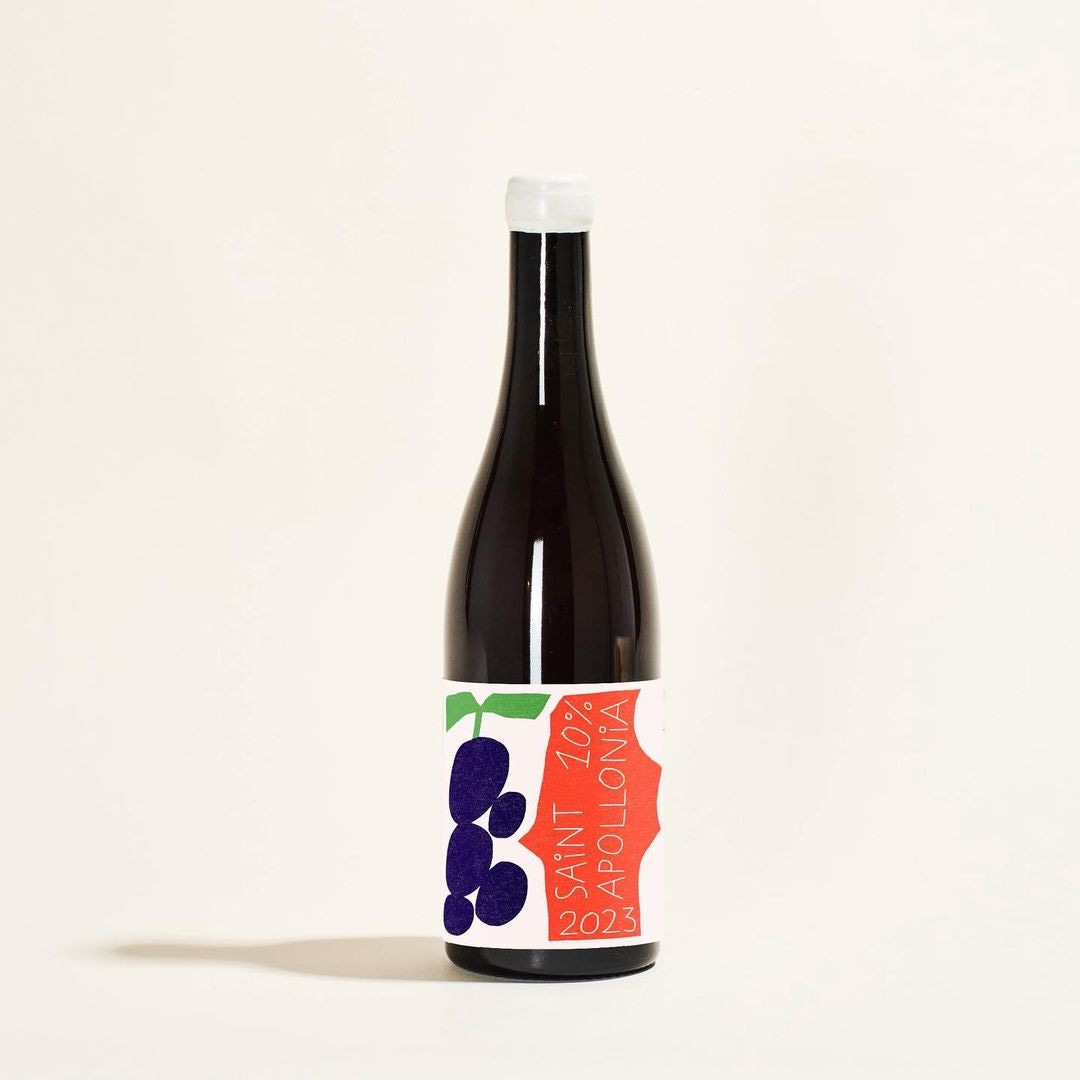
For one thing, a lot of it tastes bad. Too often it’s sharp and sour, edging toward vinegar. It can smell like nail polish, or dead flowers, or a compost heap after rain. The orange ones taste like oxidized cider, the sparkling ones like moldy peaches soaked in homemade kombucha, the reds like strawberries stewed down with tomato leaves. When you’ve been promised the future of wine and handed a farty-smelling glass of dirt water, of course you’re going to have questions.
Perhaps it’s the way the bottles look: cartoon labels in neon or pastels, crown caps, murky grayish yellow wine with a sludgy layer of sediment at the bottom. Often, there’s a terrible French pun on the label that barely anyone understands — and those who do feel dumber for it. The whole presentation leans juvenile, wines that look like they belong at a college zine fair. The aesthetic begs: don’t take me seriously even as every choice is a carefully curated virtue signal.
And then there’s the culture: I agree, it’s often unbearable. Natural wine lives in Brutalist restaurants with no signage, on the tables of boutique hotels, in bars where the playlist is curated more carefully than the wine list. It shows up in hazy Instagram grids and TikTok reels where someone tilts a cloudy glass at golden hour and captions it with an impossibly obtuse tasting note that references Nietzsche. It’s merch for a scene. It’s been flattened into shorthand for taste in the same way that A24 title cards, vintage Carhartt jackets, and limited-edition sneakers have been flattened. I can see why all this might rub you the wrong way. Allow me to quickly put some of this in context so I can get back to my essay on why our grandparents should all be listening to Yung Lean.
Here’s the deal: the practices behind “natural wine” aren’t new, and they aren’t the problem. What people are usually pointing to is a set of loose, overlapping priorities, which I broadly see as good:
Farming: Grapes grown without synthetic herbicides or pesticides, sometimes biodynamically. Biodynamics (the Rudolf Steiner system from the early 20th century) means farming in tune with lunar cycles, composting, planting cover crops, treating the vineyard as a living organism. It sounds esoteric, but the core idea is holistic, regenerative agriculture.
Fermentation: Instead of using lab-grown commercial yeast strains, natural winemakers rely on the ambient yeasts already living on grape skins and in the cellar. This makes fermentations riskier and less predictable, but often more distinctive.
Additives: Minimal to none. No powdered tannins, no mega-purple coloring, no chemical stabilizers.
Sulfur: As little as possible. Sulfur dioxide (SO₂) is traditionally used to stabilize wine and prevent spoilage, but too much can mute aromas. Natural winemakers try to bottle with none or very little — which is why some bottles feel volatile, more likely to re-ferment in the bottle or show inconsistencies.
Labor and land: The conversation often bleeds into questions of stewardship — who owns the land, who works it, whether farming and winemaking are done in ways that respect workers and ecology.
In short: cleaner farming, riskier fermentations, fewer additives, more transparency.
None of this is radical. This way of working has existed in parts of Europe for centuries. Plenty of “classic” producers in Burgundy or the Loire have been farming organically for decades without calling their wines “natural.” The difference is that this disparate set of practices got rolled up into a single cultural shorthand and branded natural wine.
And that’s where your problem probably lies. Not with the practices, but with the vibe.
I can tell you, as a sommelier, wine director, and consultant, I’ve been asked many times to “create an all-natural wine list” by people who know barely anything about wine at all. These are business owners, not people who care about labor politics in rural Europe, or who want to debate the pros and cons of biodynamics, or who know what spontaneous fermentation actually entails. They want the aura. They want the signal that says: we’re cool, we’re relevant, we’re young, come drink here. And they don’t care if the wine tastes like pickle brine and rotten cantaloupe, as long as it photographs well under candlelight.
That’s what natural wine has become: shorthand for cool.
And once something becomes shorthand for cool, it almost doesn’t matter what it actually is. A bottle can taste like a sourdough starter laced with battery acid, and people will still drink it, because the vibe delivers. The signifier outweighs the substance. Which is why natural wine has been so easy to hate, and also why it has become unavoidable.
Here’s some history. The modern American palate didn’t come out of nowhere. It was shaped, bluntly, by an inferiority complex. In the 1970s, when California wine was still trying to prove itself against France, American winemakers engineered their bottles to beat the French at their own game. The benchmark was Burgundy and Bordeaux — regions codified into hierarchies since at least the 1855 classification of Bordeaux, where entire châteaux were ranked into first, second, and third growths like aristocrats at court.
To compete, Americans didn’t lean into subtlety. They built wines like battering rams. Heavily extracted, deeply colored, saturated with oak, engineered for power. Big fruit, big body, high alcohol — wines that could win blind tasting panels through sheer force. And it worked. The 1976 Judgment of Paris, where California wines beat the French in a blind tasting, is still treated like the moon landing of Napa. But what it really did was set the template for a generation: size, weight, and oak as markers of quality.
Enter Robert Parker. In the 1980s and 90s, his 100-point scoring system became gospel. Parker rewarded wines that were ripe, powerful, oaky, and obvious — wines that announced themselves like an overcompressed pop chorus, designed to hit you in the first 30 seconds. Winemakers chased those scores because high scores meant sales, and soon the American palate was trained to equate “quality” with excess. This is what people mean when they talk about the “Parkerization” of wine: the flattening of style into something engineered for maximum impact, even at the expense of nuance.
It was out of this climate that the pendulum began to swing the other way. Importers like Kermit Lynch and Louis/Dressner started to push back, championing wines that weren’t engineered to win tastings but to express vineyards. They called them wines of terroir — a word that, depending on who you ask, means everything or nothing. Wines that spoke of a place, of a growing season, of the soil. Instead of alcohol and oak, they prized acidity, transparency, freshness. The branding term was “balance,” which of course is subjective — whose balance, compared to what? But the intention was clear: less manipulation, more specificity.
Natural wine is the continuation of that moment, though with a sharper edge. You might even say it’s the bastard child of the Lynch/Dressner school and the Mac DeMarco Industrial Complex. It takes the ethos of terroir expression and pushes it further toward accessibility, toward everyday drinking, and most of all toward a new kind of wine brand. It trades in the same rejection of Parkerized polish, but updates the packaging: not just the farming and fermentation practices, but the cultural signal that says this is cool, this is of the moment. Sometimes the politics are real — ecological farming, fair labor, land stewardship. Sometimes they’re flimsy, just slapped onto a bottle to catch the wave.
That’s where we are now. The practices themselves — organic farming, native yeast, low intervention — have existed forever, and for good reason. What’s new is the shorthand. “Natural wine” has been packaged as a vibe. A vibe that can be self-righteous and cloying in its outright stupidity. But a vibe that also, undeniably, reshaped how people drink.
I think natural wine serves two interesting functions in the culture of wine drinking.
The first function is the on-ramp. Natural wine is like streetwear drops for people who don’t care about tailoring. You can’t afford Savile Row or Brunello Cucinelli, and honestly you don’t even want to — but you can line up for Supreme, or grab a limited sneaker release, and feel like you’re participating in taste. Wine, thanks to Parker and the luxury aura he helped inflate, locked the doors on itself. Burgundy became Birkins. Bordeaux became Rolex. Natural wine was the cheap hoodie that still signals access to the scene.
And once you put it on, it fit right in with the rest of the cultural wardrobe. The same crowd that argues over single-origin coffee or wild-fermented sour beers could now weigh in on pét-nat. Funk wasn’t a flaw; it was terroir-adjacent credibility. For millennials and Gen Z with disposable income but no time for wine encyclopedias, it was a perfect fit. Grab a cloudy bottle for $28, pour it at a dinner party, and suddenly you’re signaling literacy in the same semiotics that make James Murphy legible as a culinary tastemaker. If I care at all about the actual value of drinking wine, and the future of the industry I work in, I’d like for there to be fewer barriers to entry, and more ways to enjoy the stuff.
The second function is the release valve for insiders. Natural wine is the four-track demo after a year in the studio. It’s the lo-fi cassette you make to remember why you started playing in the first place. Working in wine at a high level is a lot like being a session musician: you can be incredibly skilled, incredibly sensitive, even indispensable — but you’re still background to someone else’s wealth and power. You can be a mega hotshot sommelier, but you’re always in service to someone else’s good time. You go to work and open thousands of dollars’ worth of Château Latour for LA Reid, or Fred Durst (real examples), you play your part perfectly and you go home exhausted.
That’s why a bottle of whole-cluster Gamay can hit like a garage band through a practice PA. It’s scrappy, it’s noisy, it’s fun, and most importantly, it doesn’t sound like work. It doesn’t taste like your job. After years of parsing the tannic architecture of Grand Cru Burgundy, drinking a glou-glou Loire Valley red is like turning up the guitar until it feeds back and laughing about it. The rigor falls away and you remember the joy. It’s a juicy beverage made by a real person that’s not trying to impress you or flex on you. It’s just there, and honest, and (hopefully) delicious.
And this is why natural wine is still valuable, even when it’s bad, even when it’s been flattened into a stupid brand. It keeps the doors open for outsiders while giving insiders an escape hatch. It’s hype and it’s demo tape, it’s fashion week and garage rock, it’s a scene and a sigh of relief.
Of course, the critiques aren’t hard to stack. Natural wine has all the worst habits of contemporary culture: a lifestyle brand pretending to be an agricultural product, a moodboard in a bottle. It’s become parody-proof in its austere commitment to goofiness. Even the ethics get co-opted. Farming organically, treating workers fairly, respecting land — these are serious commitments. But in the hands of natural wine’s loudest marketers, they collapse it into the same half-digested talking points you’d hear at a pop-up wellness launch. Sulfur becomes gluten, biodynamics becomes astrology, and the line between politics and branding dissolves.
But here’s the part that’s harder to explain: for all of its excesses, its failures, its clout-chasing, natural wine still matters. Not because it’s better wine — often it isn’t. But because at its best, it feels alive in a way other wines don’t.
Alive in the literal sense: you open a bottle and it’s still moving, fermenting, shifting in the glass. Alive in the cultural sense: it makes people argue, draw lines, roll their eyes, gatekeep and fight about what “counts.” Alive in the emotional sense: when you find the right one, it doesn’t feel like a luxury object or a status token, it feels like something that breathes back at you.
For me, that’s the difference. A Montrachet Grand Cru might be a symphony, polished and eternal, but a skin-contact Savagnin can feel like a practice session in your friend’s basement. One is greatness as permanence; the other is greatness as immediacy. And in a culture where permanence is commodified and every taste is flattened into a luxury tier, immediacy is a small but worthwhile thrill.
It’s OK to hate natural wine. It’s sceney, it’s self-serious, it’s overbranded. It has all the trappings of late-capitalist taste-making. But also, when it’s good, it’s alive. And in its best moments, when a bottle throws off its own peculiar energy — humming, off-kilter, slightly dissonant — it can remind us that we are too.
If you’re new here, Thirst Behavior is where I pull at threads like this — how wine, culture, and taste get tangled up in ways that are sometimes maddening, sometimes beautiful. Natural wine just happens to be the example this week, but next time it might be Champagne pricing, Hamptons drinking culture, or why everyone suddenly cares about Zinfandel again.
If you’ve got thoughts, hot takes, or bottles I should know about, send them my way. If you work in restaurants, I want to hear what’s moving on your list. If you’re just drinking at home, tell me what you’ve opened that surprised you. If you’re neither, feel free to send gossip, half-baked theories, or anything that belongs on the cultural moodboard. That’s the point of Thirst Behavior: it’s a conversation, not just a broadcast.
🥂
Excellent discussion. I would only add that the natural wine movement (and I heartily agree with your caveats and reservations about it) has had a positive influence on the discussion of wine and viticulture by focusing on less intervention and more environment-friendly practices. Other factors, esp. climate change, are driving that too, of course.
Some historians and older folks like me might raise their eyebrows at your discussion of the Judgment of Paris. Those wines are often considered a more restrained California style before it got overblown in the '80s. Warren Winiarski certainly wasn't trying to make a behemoth cab just to beat the French at a tasting in Paris. In fact, he didn't even know his wine was in the mix until he learned he had won.