
Thirst Behavior is a project about wine, taste, and the social performances that form around them, the rituals of enjoyment shaped by status, media, money, and desire. Wine is the entry point; the real subject is how taste gets made, circulated, and contested, especially in New York and the Hamptons, where leisure and tastemaking overlap most visibly.
You can find my most recent feature here.
This piece is part of the Reviews section, where I visit restaurants, bars, and drinking establishments and look closely at the cooking, hospitality, and cultural theater of going out.
Reviews, like Friday features, are always free. But if you want the weekly intel and ongoing education—plus to support independent wine writing that doesn’t do scores or sponsors—upgrade whenever it feels right.
If you’d like to work together or have consulting inquiries, pitches, or scoops, please email me at bodhilanda@gmail.com.
On a recent Friday night in Leeds, New York, we began the evening at Casa Susanna in a small lounge beside a fireplace, drinking unbelievably salty mezcal margaritas and waiting for our table. The room was warm and softly lit, the crowd young and stylish in an unmistakable Upstate-for-the-weekend kind of way—New Yorkers temporarily relocated two hours north in search of air, trees, and modern Mexican cooking.
The first dish to arrive once we were seated was an aguachile negro with scallop crudo, chestnut, and corn tostadas stained black with squid ink. It immediately rearranged my expectations. Small wedges of raw scallop rested in a liquid so dark it looked almost lacquered. The flavor, however, was shockingly bright: a ripping acidity that sharpened the sweetness of the scallop until it felt almost electric. Somewhere in the dish was a green herb I couldn’t identify by flavor or by sight—something sharp and mysteriously aromatic (was it curry leaf?) that gave the chilled broth a bewildering dimensionality.
It’s rare, at least for me, to encounter a flavor combination that feels genuinely unfamiliar. Restaurants often promise novelty but deliver careful variations on things you already understand. This dish did something different. The colors, the textures, the interplay between sweetness, acid, and mystery herb created a moment of pleasant sensory disorientation.
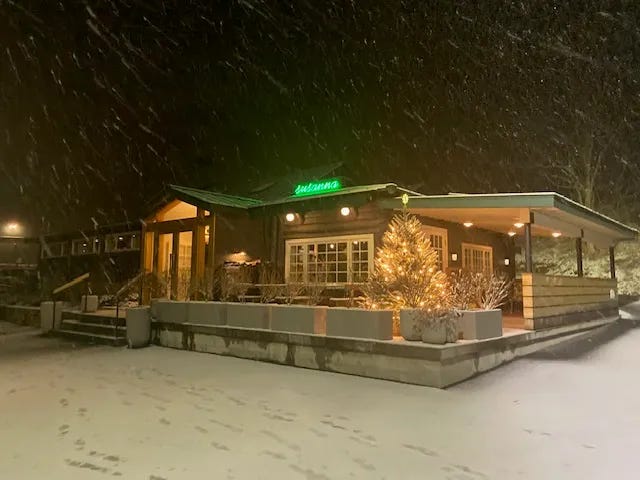
The cooking comes from chef Éfrén Hernández, whose work has become one of the more interesting culinary stories in the Hudson Valley. Hernández has built a reputation for translating Mexican techniques through the ingredients of the region—corn, vegetables, smoke—while maintaining a level of precision that can be surprisingly difficult to achieve outside major cities.
Part of the surprise came from the setting. The Catskills dining scene has expanded rapidly over the past decade, fueled by the steady migration of city dwellers seeking quieter landscapes and slower weekends. Restaurants have followed them north, many attached to hotels or rural properties that promise a particular kind of pastoral luxury: a beautiful room, a thoughtful cocktail program, maybe a menu that gestures toward the bounty of local farms.
Some are excellent. Others rely more heavily on atmosphere than cooking.
Casa Susanna initially seemed like part of that ecosystem. The dining room hummed with the easy confidence of a place that knows its audience—couples in well-cut denim and expensive sneakers, groups of friends sharing plates and passing phones across the table to photograph them. It had the familiar social energy of a downtown restaurant scene that has simply migrated north for the weekend.
Our server gave us a rundown of the restaurant’s masa program.
With earnest enthusiasm, they delivered a brief lesson in nixtamalization—the ancient process of treating corn with alkaline minerals to unlock its flavor and nutrition. Casa Susanna makes its tortillas and other masa products in-house, starting with dried corn and working forward from there. The explanation was delivered casually, with care and specificity, the way someone might tell you about a favorite record.
It was the first indication that the kitchen was operating with deeper ambitions than the setting might initially suggest.
The tetela with yellow mole, leeks, and puntarelle confirmed it. Tetelas are triangular masa pockets, traditionally griddled and filled, and here the masa itself was the star. This plush corn cake carried the unmistakable depth that comes from proper nixtamalization—the flavor of corn amplified into something nutty, warm, sweet and savory. Inside, a pillowy melted alpine cheese stretched softly between bites. If the crudo was a moment of suspension, the tetela leaned into a kind of romantic comfort, recalling the undeniable pleasures of soft corn and melted cheese.
Other dishes arrived in steady succession. A beef tartare appeared brightened with herbs and acidity, topped with a tostada slathered in bone marrow aïoli and dusted with fermented cranberry powder. The meat was hand-cut and ate soft and smooth, punctuated by the occasional soft crunch of macadamia nuts—another moment of welcome disorientation.
A plate of castelfranco radicchio and sunflower seeds brought bitterness and crunch to the table, a necessary counterweight to the richer plates surrounding it.
Another absolutely wild corn experience arrived in the form of a sope layered with maitake mushroom and huitlacoche. It carried an earthy, funky depth, sharpened by black garlic and a flash of horseradish. Mushrooms and corn fungus are ingredients that can easily become overwhelming together, but here the dish was restrained—small, concentrated, and just enough for a couple bites each.
And then there was the smoked lamb barbacoa, bathed in a broth of its own braising liquid, and served with house-made corn tortillas and a few grilled and blistered fajita-like accoutrements. I gleefully assembled the perfect taco, thinking about my childhood in central Texas, when the expensive plate of fajitas would sizzle through the dining room on its way to someone else’s table.
What impressed me most was not any single flourish but the consistency of technique across the meal. The cooking at Casa Susanna reads as playful on the surface, but underneath that playfulness is a disciplined attention to balance, texture, and seasoning.
Looking around the room again, it became clear that Casa Susanna had already found its audience. The Catskills have increasingly become an extension of New York City taste culture: a place where the same diners who fill Brooklyn wine bars on Tuesday nights now gather for long weekend meals in converted farmhouses and hotel dining rooms. Restaurants in the region often trade on that migration, offering a carefully calibrated version of rustic luxury.
But country restaurants face structural challenges that city restaurants don’t. Staffing is harder. Business fluctuates with the seasons. Kitchens often aim for charm rather than precision. It is surprisingly difficult to build a restaurant far from a major city that maintains both consistency and ambition.
In this respect, Casa Susanna feels like a miracle.
The restaurant’s name gestures toward the property’s regional history. The original Casa Susanna was a mid-century retreat in the Catskills that served as a refuge for transgender women and cross-dressers during a time when such spaces were rare and often hidden. Photographs discovered decades later show people cooking, relaxing, and socializing in a rare atmosphere of safety and community. Naming the restaurant after that place situates the project within a longer and stranger lineage of Catskills hospitality.
Chef Hernández’s ambitions in the Hudson Valley appear to be expanding. Hernández is currently reworking the kitchen at Rivertown Lodge in nearby Hudson, transforming the restaurant there into another modern Mexican concept. If Casa Susanna is any indication, that project will be worth watching.
If this level of cooking existed in Manhattan, it would already be notable. That it exists in Leeds, New York makes it genuinely surprising.
By the end of our meal, that sense of surprise hadn’t entirely worn off. Restaurants sometimes promise discovery but rarely deliver it; more often they offer careful variations on things we already know. Casa Susanna, on the other hand, produced several moments that felt legitimately new.
In a dining culture that can sometimes feel predictable, that kind of experience is increasingly rare, and increasingly valuable.

LOVE Casa Susanna, what an unexpected gem up here in our little part of the world. xx